Running stitch
Also known as Darning stitch, Quilting stitch
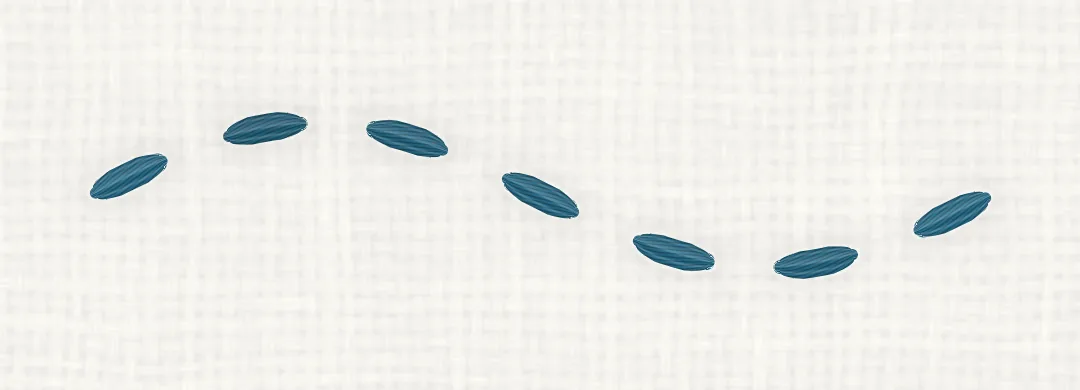
The simplest line stitch: even stitches with even gaps between them, giving a light, dashed line. It is also the start of whipped and laced running stitch.
Quick facts
- Type
- Line stitch
- Best for
- Dashed lines, Simple outlines, Borders and texture
- Difficulty
- Beginner (1 of 3)
- Strands
- 2–3; up to 6 for a bold line (of six-strand floss)
- Needle
- Embroidery (crewel) needle, size 7–9
- Stitch length
- About 3 mm (1/8 in) stitches with gaps of about 2 mm (1/16 in)
- On curves
- Good, with shorter stitches and gaps on tight curves
- Related
- Backstitch, Whipped backstitch
Step by step
Shown right-handed, worked from left to right with the stab method in a hoop: the needle goes straight down through the fabric, then straight up, one movement at a time.
First stitch
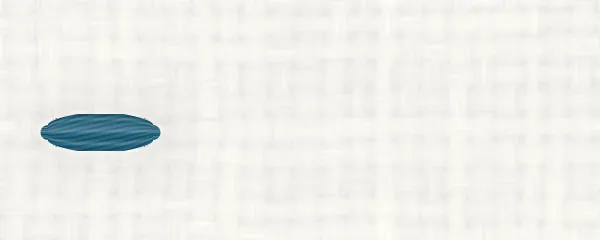
Bring the needle up at 1, at the start of the line, and take it down at 2, a stitch length of 3 mm (1/8 in) along.
Leave a gap, stitch again
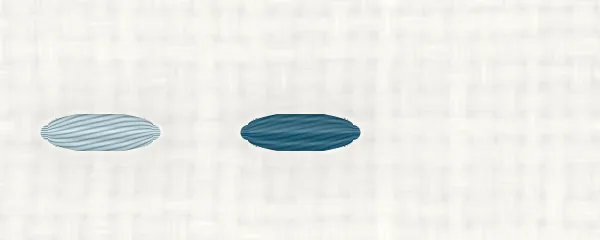
Leave a gap of about 2 mm (1/16 in): come up at 3 and go down at 4, another 3 mm (1/8 in) along.
Keep going
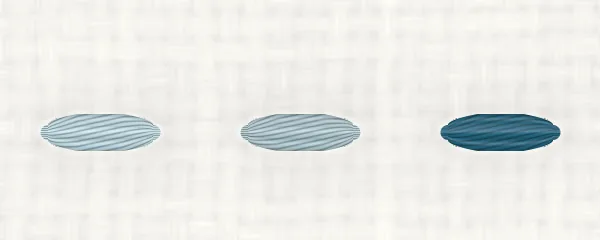
Repeat: up at 5 after the same gap, down at 6 after the same stitch length. Keep the stitches, and the gaps, even.
Finish the line
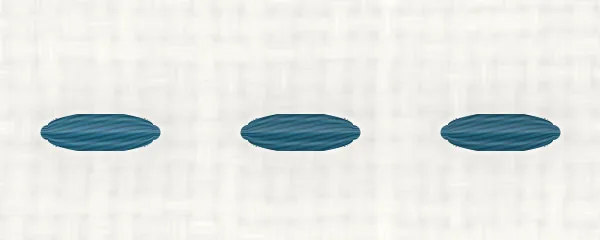
At the end of the line, take the thread to the back and weave it under a few stitches there.
Shown left-handed, worked from right to left with the stab method in a hoop. The pictures are the right-handed ones turned half a turn, so the stitch is exactly the same.
Tips
- Keep the stitches the same length and the gaps the same length: uneven gaps are what the eye notices first.
- Sources differ on the gaps: some keep them as long as the stitches, others a little shorter. Either looks good if you keep it even; the pictures here use 3 mm (1/8 in) stitches and 2 mm (1/16 in) gaps.
- With the sewing method (fabric in your hand or a loose hoop) you can load several stitches onto the needle before pulling it through. In a taut hoop, stab one stitch at a time.
- On curves, shorten the stitches and the gaps together, so the line still follows the curve.
- For a bolder line, whip or lace it: pass a second thread under each stitch without entering the fabric.
Common mistakes
Uneven stitches and gaps
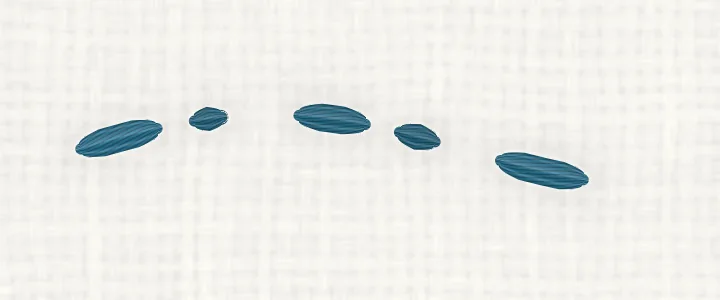
Looks like: The stitches and gaps vary, so the line looks hurried.
Why it happens: Each stitch and each gap was judged afresh by eye.
Fix: Pick a stitch length and a gap and keep to them. On a tricky line, mark small dots first.
Puckered fabric
Looks like: The fabric gathers along the line.
Why it happens: The thread was pulled too tight, which is easy to do after loading several stitches on the needle.
Fix: Pull each stitch just snug, and keep the fabric taut in a hoop.
The back of the work
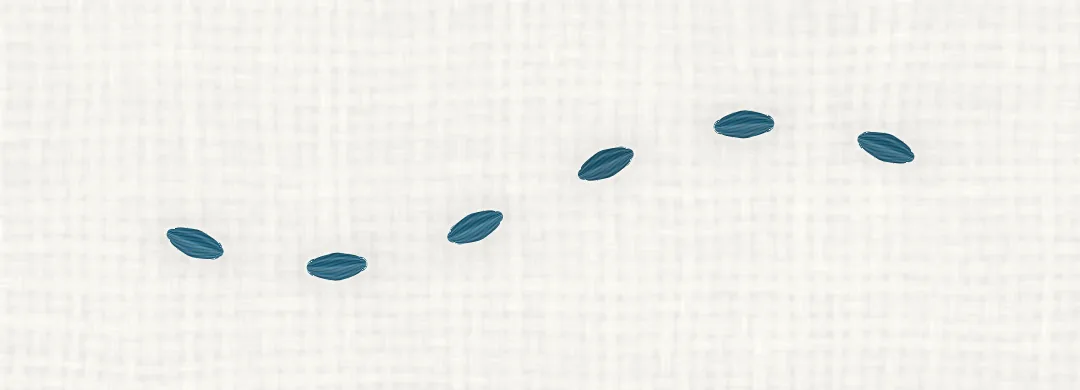
The back of running stitch is another dashed line, with its stitches under the front's gaps: the thread runs along the back wherever the front is bare.
Variations
- Whipped running stitch: A second thread wrapped round each stitch, without entering the fabric, makes a raised, twisted line.
- Laced running stitch: A second thread laced up and down through the stitches makes a wavy line.
- Double running stitch: A second pass back along the line fills the gaps, giving a solid line that looks the same on both sides.
Compare
Use running stitch for a light, dashed line or a quick, hand-drawn look; use backstitch where the line must be solid. Backstitch
In a Hoopsake pattern
Hoopsake turns your photo into a hand-embroidery pattern with a real stitch plan: it chooses a stitch such as running stitch for every line, matches each colour to a DMC thread and gives you a guide to print. Make a pattern from a photo
Names and history
Running stitch is also called darning stitch and quilting stitch. Basting, or tacking, is running stitch worked long and loose to hold fabric in place for a while. It is the base of pattern darning and of quilting traditions such as kantha and sashiko.
Questions
How long should running stitches be?
About 3 mm (1/8 in) is a good start, with gaps of about 2 mm (1/16 in). Longer stitches suit bold, casual lines; shorter ones follow curves better.
What is the difference between running stitch and backstitch?
Running stitch leaves a gap after every stitch; backstitch goes back to fill each gap, so its line is solid.
Can I load several stitches onto the needle?
Yes, with the sewing method, when the fabric is in your hand or a loose hoop. In a taut hoop, stab each stitch.
Is running stitch the same as basting?
Basting (tacking) is running stitch worked long and loose to hold fabric for a while, and pulled out later.