French knot
Also known as French dot, Knotted stitch, Twisted knot stitch
A small, raised knot made by wrapping the thread round the needle and taking it back down beside where it came up. Use it for dots, eyes, flower centres and texture.
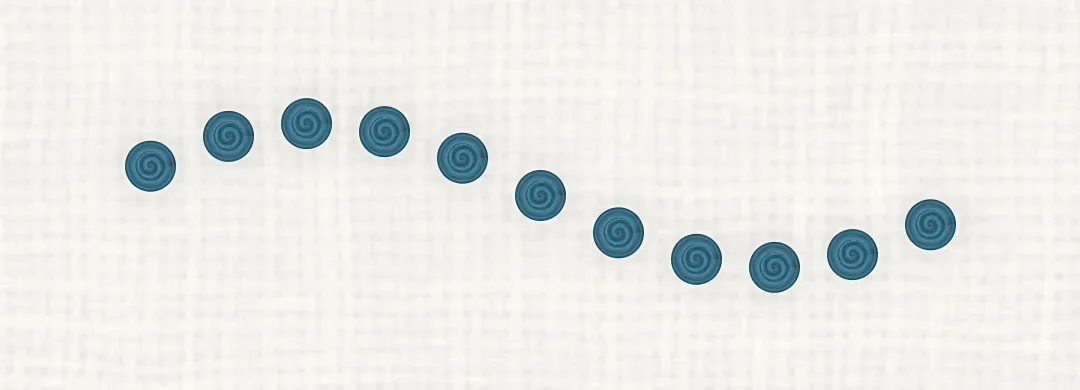
Quick facts
- Type
- Detached stitch
- Best for
- Dots and eyes, Flower centres, Texture
- Difficulty
- Easy with practice (2 of 3)
- Strands
- 2–3; more strands, not more wraps, for a bigger knot (of six-strand floss)
- Needle
- Milliner (straw) needle: its eye is no wider than its shaft, so it slides through the wraps
- Stitch length
- None: each knot stands alone, about 2 mm (1/16 in) across with 3 strands
- On curves
- Not a line stitch: place knots one by one along any line
Step by step
Shown right-handed, with the stab method in a hoop, which frees your other hand to hold the thread taut while you wrap.
Come up
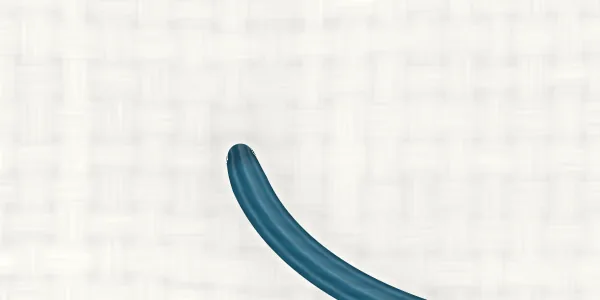
Bring the needle up at 1, where the knot will sit, and pull the thread through.
Wrap the needle
Hold the thread taut with your other hand, a little away from the fabric, and wrap it twice round the needle, close to the fabric.
Go down beside it
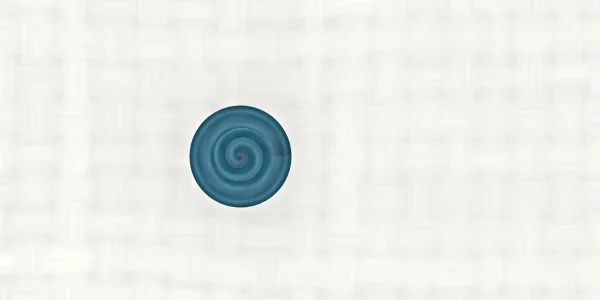
Put the needle tip in at 2, right beside 1 but not in the same hole: a thread or two away. Slide the wraps down to the fabric and, keeping the thread taut, pull the needle slowly through to the back.
The next knot
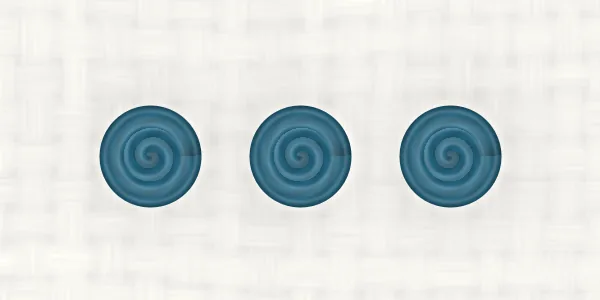
Secure the thread on the back, or go on to a nearby knot. Don't carry the thread far behind the work: it can show through.
Shown left-handed: the right-handed pictures turned half a turn. Hold the needle in your left hand and wrap with your right; the knot is the same.
Tips
- Sources differ on wraps, from one to three. We recommend two: for a bigger knot use more strands or a thicker thread, because extra wraps tend to make a loose, untidy knot.
- Never go back down in the same hole: the knot pulls through to the back.
- Keep the working thread taut until the knot has formed; let go too early and the knot goes loopy.
- Work in a hoop, so both hands are free: one for the needle, one to hold the thread.
- A milliner (straw) needle slides through the wraps easily because its eye is no wider than its shaft.
Common mistakes
The knot pulls through
Looks like: The knot disappears to the back, leaving a small stitch or nothing at all.
Why it happens: The needle went back down in the same hole it came up in.
Fix: Go down a thread or two away from where you came up.
A loose, loopy knot
Looks like: The knot is floppy, with loops of thread standing up.
Why it happens: The thread was not held taut while pulling through, or the wraps were loose.
Fix: Keep the wraps snug on the needle and the thread taut until the needle is through.
The needle won't go through
Looks like: The needle jams in the wraps.
Why it happens: The wraps were pulled too tight round the needle.
Fix: Wrap snugly but loosely enough to slide, and use a milliner needle.
The back of the work
The back of a French knot is a tiny stitch between its two holes. Between knots, keep the thread's travel short, or finish and start again, so long threads don't show through.
Variations
- Colonial knot: Wrapped in a figure of eight instead of round and round; larger and rounder, and used in candlewicking.
- Pistil stitch: A French knot at the end of a straight stitch, like a flower's stamen.
In a Hoopsake pattern
Hoopsake turns your photo into a hand-embroidery pattern with a real stitch plan: it chooses a stitch such as French knot for every line, matches each colour to a DMC thread and gives you a guide to print. Make a pattern from a photo
Names and history
Also called French dot, knotted stitch and twisted knot stitch. It is easy to confuse with the colonial knot, which uses a figure-of-eight wrap and makes a larger, rounder knot.
Questions
Why does my French knot pull through to the back?
The needle went back down in the same hole. Go down a thread or two away, and keep the thread taut as you pull through.
How many wraps for a French knot?
Two. Sources range from one to three; for a bigger knot, use more strands rather than more wraps.
How do I make a bigger French knot?
Use more strands or a thicker thread. Extra wraps make a looser knot rather than a bigger neat one.
Do left-handers make French knots differently?
Only in which hand does what: hold the needle in your left hand and wrap with your right. The knot is the same.